


|
Underpainting
Underpainting is a way to establish tonal control of your painting. There are several ways to do this. My preference is either to use what I call base colours or monochrome which tends to be used more commonly. This painting was done using the former method. Because of the complexity of the foliage and my desire to work realistically I worked from detailed drawings and had several reference photographs to guide me. I have an example of using the monochrome method here 1, I stain the canvas with a layer of emerald oil paint thinned with white spirit. I draw in the basic shapes using black, thinned with white spirit.
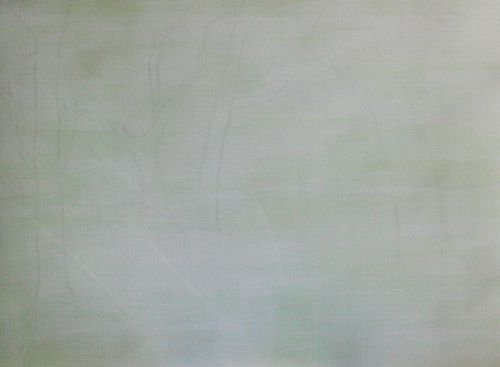
2, I block in the darkest areas with ivory black and viridian. The paint is now thinned with linseed oil. I built up the paint in three layers.
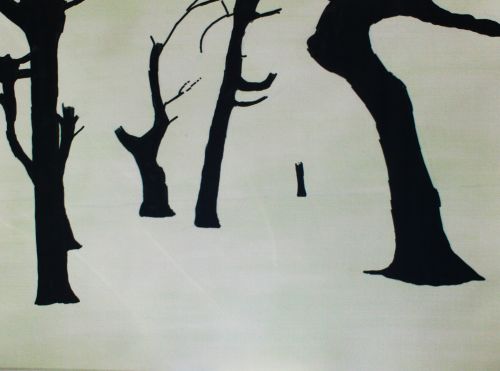
3, The next darkest parts are blocked in. I weakened the colour by adding slightly more viridian.
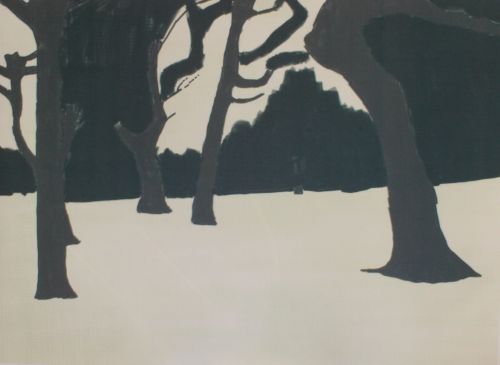
4, The foreground is burnt umber and black. Now the underpainting is complete. The rest of the work will be built up with broken colour. 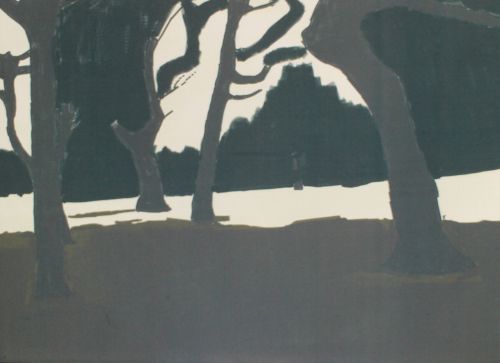
5, The branches have conveniently divided the working areas. I concentrate on one part at a time. I have an array of earthy colours on the palette, mixed from viridian, ivory black, zinc white, cobalt blue, emerald, cadmium yellow, burnt umber and burnt sienna. I add small dabs and lines of colour, building up the foliage and branches.
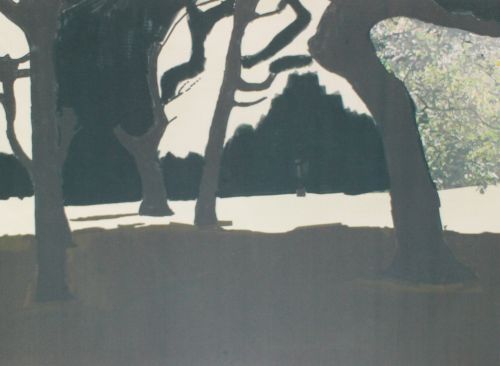
6, I use the same oil painting technique on each area.
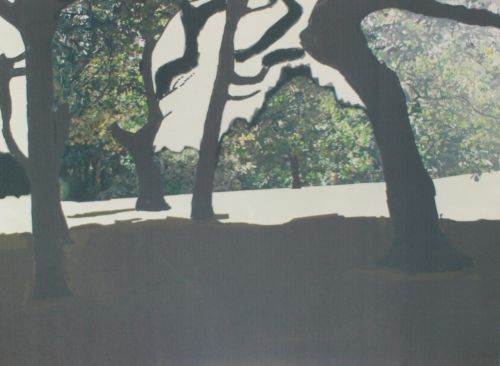
7, The background is complete.
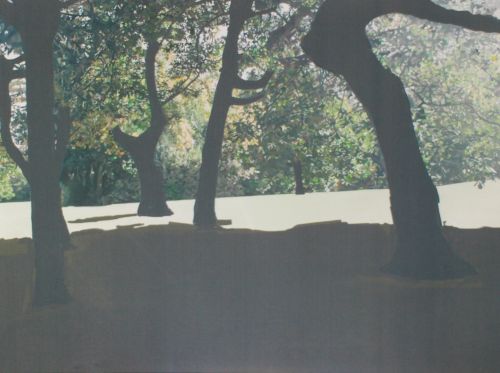
8, Now I work across the trees, using the same technique.
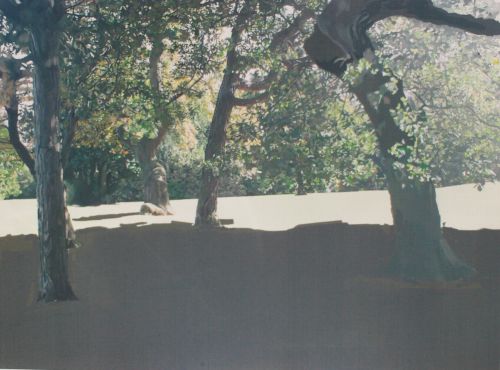
9, The middle ground is done with a flat brush. I wash colour across it and use the corner of the brush to apply little dashes of colour.
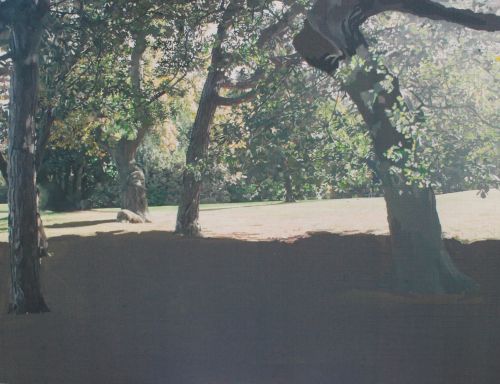
10, The foreground is made up the same way.
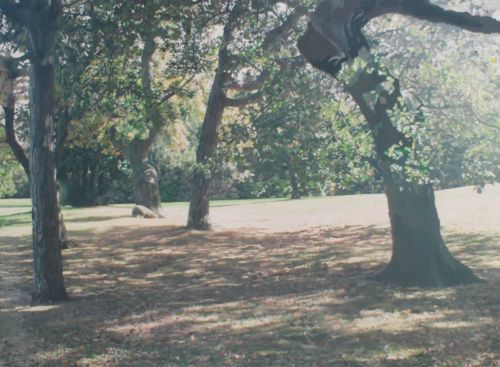
This method works well with smaller landscape paintings or where there is little variation in tone. Return from Underpainting to Oil Painting Techniques Home
|

